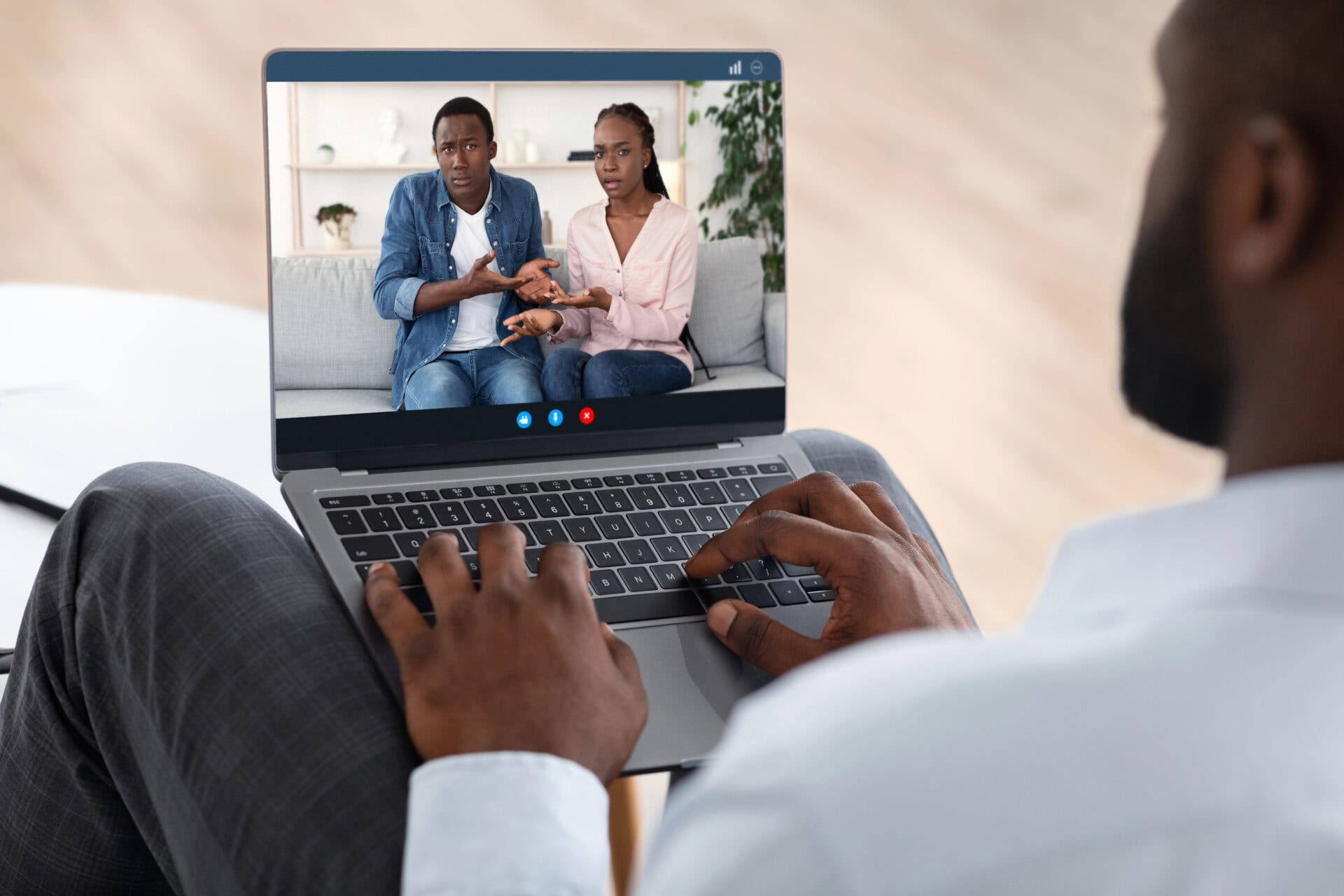
Does Online Couples Therapy Work?
How Does Virtual Couples Therapy Compare to In-Person Sessions?
The short answer is yes—online couples therapy works. Many partners assume that genuine emotional connection can only be built face-to-face, yet clinical experience consistently shows that when couples take the virtual process seriously, online marriage counselling can be just as effective as in-person therapy. For many clients, it becomes the preferred format.
Below is a detailed overview of the advantages and limitations of virtual couples counselling to help you determine whether it is the right fit for your relationship.
Benefits of Online Couples Therapy
1. Increased Physical Safety
During the pandemic, virtual counselling became the only safe option for many couples. Today, it continues to offer important benefits: if one partner is contagious or if safety concerns prevent partners from being in the same room, online couples therapy provides a secure way to continue treatment. For situations involving high conflict or risk of escalation, the virtual format can be indispensable.
2. Convenience and Privacy
Meeting from home eliminates travel time, parking stress, and waiting-room discomfort. Couples can attend sessions without worrying about being recognized or seen entering a therapist’s office. This convenience alone is one of the strongest reasons clients choose virtual couples therapy.
3. Sessions from Separate Locations
Modern video platforms allow more than two participants, making it easy for partners in different locations—whether in another office, another city, or another country—to attend sessions together. Long-distance couples or partners who travel for work often find this invaluable.
4. More Flexible Scheduling
Therapists are often able to offer evening or weekend appointments when the session is conducted online. Even if the therapist is local, virtual sessions expand scheduling options and reduce logistical barriers.
Limitations of Online Couples Counselling
1. Connectivity Issues
A weak internet connection is the most common limitation. If the signal drops, sound or video may become distorted, and the session may need to be paused, rescheduled, or temporarily moved to a phone call. A stable connection significantly improves the experience.
2. Difficulty Speaking at the Same Time
Even with strong connectivity, online platforms process audio sequentially rather than simultaneously. Partners may need to take clearer turns speaking. For couples who interrupt each other often, this is helpful; for others, it may feel slightly restrictive.
3. Limited Whiteboard or Visual Teaching Tools
If a therapist does not use screen sharing or digital whiteboards, clients may miss some of the visual components used to explain complex concepts. Once a therapist is proficient with screen sharing, this limitation disappears.
4. Model-Specific Techniques
Certain therapy models require physical proximity, movement, role plays, or exercises that rely on body positioning. These interventions are not easily replicated online. If your therapist relies heavily on such methods, in-person sessions may be more appropriate.
5. Technological Hesitation
Some clients—and some therapists—struggle with downloading or navigating online platforms. This is not a limitation of virtual therapy itself, but it can prevent couples from starting the process. With brief technical support, this barrier usually disappears quickly.
Conclusion: Is Virtual Couples Therapy Effective?
For the vast majority of couples, the answer is yes. With a strong internet connection and a willingness to engage, virtual couples counselling offers meaningful, evidence-based support with exceptional convenience. Some clients initially hesitate because online therapy feels unfamiliar, yet many who try it continue virtually even when in-person sessions are available.
If you are unsure whether online couples therapy will work for you, the most reliable approach is to try a session and experience the process firsthand.